
 By
By 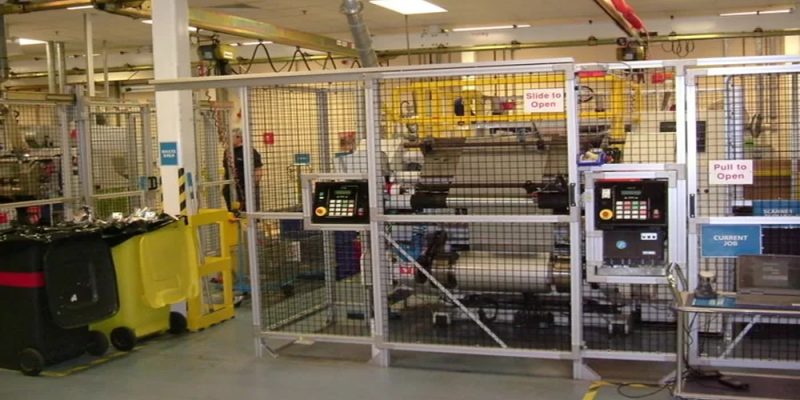
Machine guarding is a legal requirement under UK workplace health and safety regulations, and the quality and design of that guarding has a direct bearing on both worker safety and production efficiency. Poorly designed guards that are difficult to access, obstruct visibility, or slow maintenance access create their own operational problems. Aluminium profile framing has become the standard construction method for machine guarding across UK manufacturing precisely because it addresses these practical requirements better than any alternative.
This article covers how aluminium profile guarding works, the components involved, and the key design considerations for a compliant and practical installation.
Why Aluminium Profile Is the Preferred Choice for Machine Guards
Machine guards built from aluminium profile offer a combination of structural rigidity, low weight, fast assembly, and long term adaptability that fabricated steel cannot match for most guarding applications. The modular nature of profile framing means guards can be designed around the specific geometry of any machine, with access doors, windows, cable entry points, and light curtain mounting positions all integrated into the same frame structure without specialist fabrication. The range of protective panels and guarding components available for aluminium profile systems covers polycarbonate glazing panels, solid infill panels, mesh inserts, and all associated fixing hardware to suit different guarding requirements.
Key Components of an Aluminium Profile Guard
A machine guard built from aluminium profile typically consists of several distinct component groups working together:
- Structural frame profiles: the extruded aluminium sections that form the upright posts, horizontal rails, and cross-members of the guard structure; profile section size is selected based on the span, the panel infill weight, and the structural requirements of the application
- Panel infills: polycarbonate sheets for visibility, solid aluminium or steel panels where opacity is required, and mesh or perforated panels where ventilation and visibility are both needed
- Door and access components: hinges, slam latches, lock mechanisms, and sliding door hardware allow operator access for machine adjustment, tooling changes, and maintenance without removing sections of the guard
- Connection elements: corner brackets, angle connectors, and slot nuts allow profiles to be joined at the required angles and positions without welding
- Feet and levelling elements: adjustable feet level the guard structure on uneven floors and allow minor repositioning without rebuilding the frame
Compliance Considerations
Machine guarding in UK manufacturing must comply with the Provision and Use of Work Equipment Regulations 1998 (PUWER) and the Supply of Machinery (Safety) Regulations. These require that guards prevent access to dangerous parts of machinery, are of adequate strength and construction for the application, do not create additional hazards, and can be adjusted or removed only with tools. The design of the guard, including the choice of panel material, door locking mechanism, and structural section size, must all be specified with these requirements in mind.
Polycarbonate panels used in aluminium profile guards provide the required visibility for operator monitoring while meeting the impact resistance criteria applicable to most industrial guarding applications. Where higher impact risk is present, such as in guards around high-speed tooling or press operations, the panel material specification should be reviewed against the specific risk assessment for that machine.
Adaptability as Machinery Changes
One of the most practical advantages of aluminium profile guarding over fabricated steel is what happens when machinery is upgraded or the production cell layout changes. A fabricated steel guard is largely scrapped when the machine it was built around changes. An aluminium profile guard can be disassembled, the profiles recut and reassembled in a new configuration, and all connector hardware reused. This adaptability has a direct financial value over the lifecycle of a production facility where cell layouts evolve regularly.
Frequently Asked Questions
What panel material should be used for machine guard visibility windows?
Polycarbonate is the standard choice for guard viewing windows, offering high impact resistance and optical clarity; it should be specified in a thickness appropriate to the panel size and impact risk, typically 4mm to 10mm for most industrial guarding applications.
Do machine guards built from aluminium profile need to be safety-interlocked?
Whether interlocking is required depends on the risk assessment for the specific machine; PUWER requires that guards on dangerous machinery prevent access while the machine is in a hazardous state, which typically means interlocked access doors on guards around moving machinery with short stopping times.
Can aluminium profile guards be designed to accommodate future machine modifications?
Yes, and this is one of the primary arguments for aluminium profile over fabricated steel; the modular connector system allows guards to be extended, modified, and reconfigured without scrapping the original components.
What profile section size should be used for machine guarding?
40mm and 45mm series profiles are suitable for most standard guarding applications; larger 60mm or 80mm sections are appropriate for taller or wider guards, or where the guard structure must support additional equipment such as control panels or light curtain brackets.
Final Thoughts
Aluminium profile machine guarding delivers compliant, practical, and adaptable protection across the full range of industrial machinery applications. Its combination of structural rigidity, low weight, integrated access door options, and long term reusability makes it the logical specification for manufacturers who want guards that work well operationally as well as meeting their legal obligations.
For UK engineering and production teams designing machine guarding systems, a specialist in aluminium profile framing systems and guarding components provides the product range and technical support needed to design and build effective guards for any machine or production cell.









Comments