
 By
By 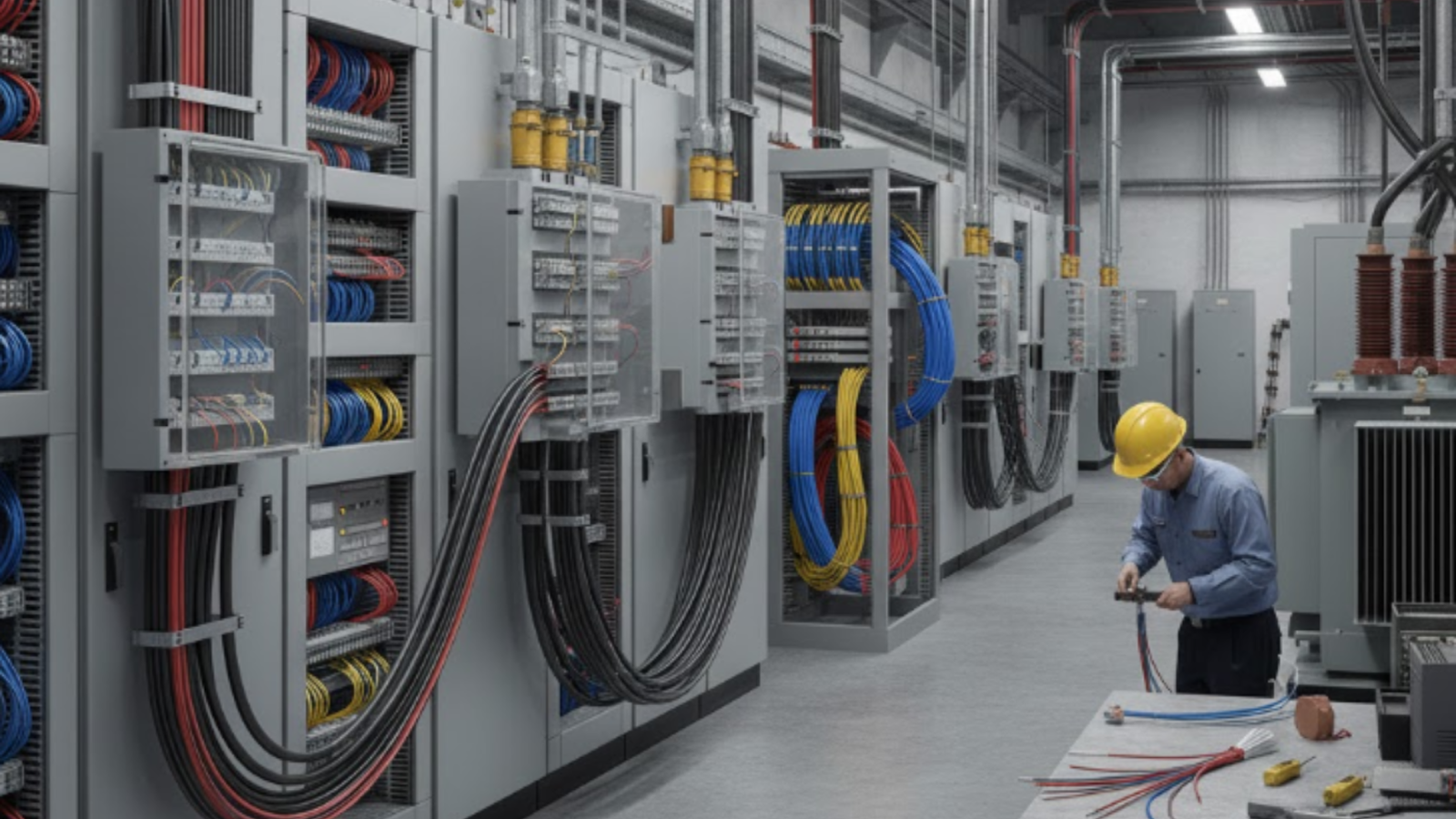
Industrial facilities represent some of the most demanding environments for electrical infrastructure. From heavy machinery and automated production lines to climate control systems and safety equipment, modern manufacturing plants, refineries, and processing facilities rely on extensive networks of electrical connections to maintain operations. Understanding where different types of wires and cables are used in these settings is essential for engineers, project managers, and maintenance teams tasked with designing, installing, or maintaining industrial electrical systems.
Power Distribution Systems
The backbone of any industrial facility is its power distribution network, which delivers electricity from the main utility connection to every corner of the operation. Heavy-duty power cables form the main arteries of this system, carrying high-voltage electricity from substations to distribution panels throughout the facility. These robust cables must handle substantial current loads while maintaining safety and efficiency.
For branch circuits that supply individual machines and equipment, appropriately sized wires and cables rated for the specific voltage and amperage requirements ensure reliable operation. In industrial settings, these circuits often face harsh conditions including temperature extremes, vibration, and exposure to oils or chemicals, requiring specialized insulation and protective features.
Three-phase power cables are standard in industrial applications, delivering the high-power requirements of large motors, pumps, compressors, and other heavy equipment. Working with experienced wire and cable manufacturer ensures access to products specifically engineered for these demanding applications, with insulation systems that maintain integrity under continuous operation and thermal stress.
Motor Control and Automation
Industrial automation has transformed manufacturing efficiency, and specialized cables play crucial roles in these systems. Motor control cables connect variable frequency drives to electric motors, carrying both power and control signals. These cables must resist electromagnetic interference while handling the switching frequencies generated by modern drive systems.
Control cables form the nervous system of automated facilities, transmitting low-voltage signals between programmable logic controllers (PLCs), sensors, actuators, and human-machine interfaces. These cables typically feature multiple conductors, each serving specific control functions, all protected within a common sheath. Shielded varieties prevent electrical noise from disrupting sensitive control signals in electromagnetically noisy industrial environments.
Servo and stepper motor cables represent highly specialized products designed for precision motion control applications. These cables must maintain signal integrity while flexing repeatedly in robotic arms, CNC machines, and automated material handling systems. Leading wire cable manufacturers develop these products with special attention to flex life, conductor construction, and shielding effectiveness.
Instrumentation and Monitoring
Accurate measurement and monitoring are fundamental to industrial process control, requiring specialized instrumentation cables. These cables connect temperature sensors, pressure transducers, flow meters, and analytical instruments to control systems, carrying minute electrical signals that must remain uncorrupted by external interference.
Thermocouple extension cables maintain measurement accuracy over long distances between temperature sensors and monitoring equipment. These cables use conductor materials matched to specific thermocouple types, preserving measurement precision critical for process control and safety monitoring.
In process industries like chemical plants and refineries, intrinsically safe cables prevent electrical sparks in hazardous atmospheres. These specially designed cables incorporate barriers that limit energy under fault conditions, preventing ignition of flammable gases or dust. Compliance with international safety standards requires sourcing these critical products from reputable wire cable company suppliers with proper certifications.
Data and Communication Networks
Modern industrial facilities depend on robust data networks for operations management, monitoring, and coordination. Industrial Ethernet cables connect distributed control systems, allowing real-time communication between control rooms and field equipment. Unlike standard commercial networking cables, industrial versions feature ruggedized construction to withstand factory floor conditions.
Fiber optic cables increasingly serve industrial communication needs, particularly over longer distances or in electrically noisy environments. These cables transmit data as light signals, immune to electromagnetic interference that can disrupt copper-based systems. In large facilities, fiber optic backbones connect distributed control networks while providing the bandwidth needed for video surveillance, asset tracking, and process visualization systems.
Fieldbus cables support specialized industrial protocols like Profibus, DeviceNet, and Modbus, connecting sensors, actuators, and controllers in distributed control architectures. These cables must meet specific electrical characteristics defined by protocol standards while withstanding industrial environmental conditions.
Specialized Industrial Applications
Certain industrial operations require highly specialized wiring solutions. In steel mills and foundries, high-temperature cables withstand extreme heat near furnaces and casting operations. These cables incorporate ceramic or silicone insulation systems that maintain performance at temperatures that would destroy standard products.
Mining and underground operations utilize armored cables with mechanical protection against crushing, abrasion, and moisture. Metal-clad or steel-wire-armored constructions protect internal conductors from the harsh conditions prevalent in mines, tunnels, and underground facilities.
Chemical and petrochemical facilities require cables with chemical-resistant jacketing that withstands exposure to corrosive substances. Many wires & cables manufacturers in India have developed specialized product lines for the subcontinent’s growing chemical and pharmaceutical industries, incorporating advanced polymer formulations that resist degradation.
Offshore platforms and marine industrial facilities demand cables rated for continuous moisture exposure, salt spray, and potential submersion. These cables feature waterproof constructions and corrosion-resistant materials essential for reliable operation in maritime environments.
Selecting Industrial Cables Wisely
Choosing appropriate wires and cables for industrial projects requires careful evaluation of operational requirements, environmental conditions, and regulatory compliance. Project specifications should clearly define voltage ratings, current capacity, temperature ranges, and environmental exposures anticipated during the installation’s service life.
Certification and compliance verification ensure products meet relevant safety standards and industry codes. International standards like IEC, national codes such as NEC in the United States or IS standards in India, and industry-specific requirements all influence product selection. Working with established wire cable manufacturers provides access to properly certified products backed by technical documentation and support.
Total cost of ownership considerations should extend beyond initial purchase price to include installation labor, expected service life, and maintenance requirements. Premium industrial-grade cables often deliver better long-term value through extended durability, reduced failure rates, and lower maintenance costs despite higher upfront investment.
Conclusion
The diverse applications within industrial facilities demand an equally diverse range of wires and cables, each engineered for specific operational requirements and environmental challenges. From heavy-duty power distribution to sensitive instrumentation, from automated control systems to data networks, selecting appropriate products ensures safe, reliable, and efficient operations. By understanding where different types are used and partnering with knowledgeable suppliers, project teams can design and implement electrical infrastructure that supports industrial operations effectively for decades to come.








Comments